
Share:
Share:
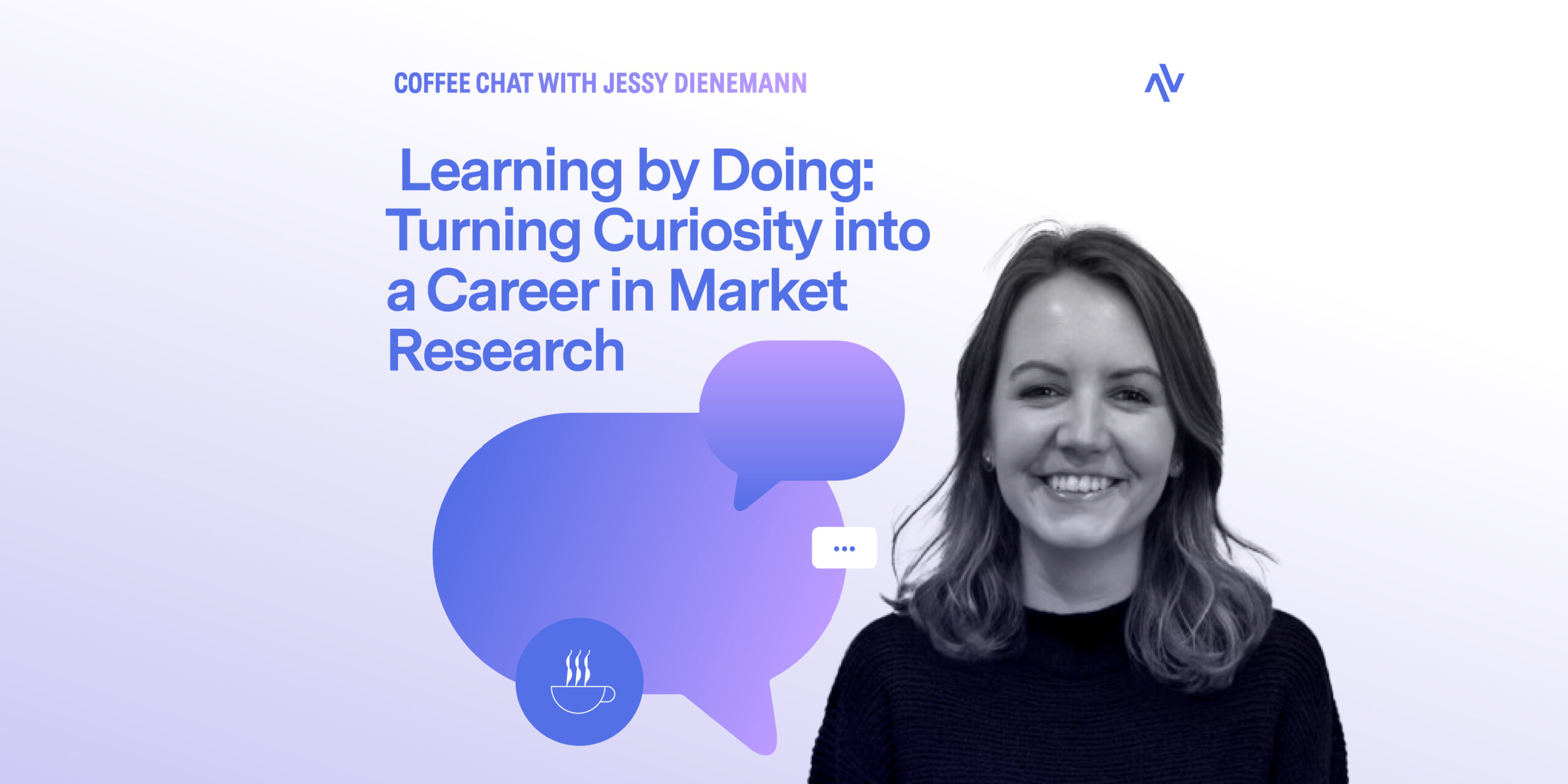
Careers in market research often begin with a simple question: how do people think, and why do they make the decisions they do? In this Coffee Chat, we hear from Jessy Dienemann, a Market Research Fellow who has built her career by turning curiosity about people and culture into a strategic, business-focused skill set.
With a background in international management, Jessy combines global perspective with analytical thinking to better understand consumers and markets. Her work reflects a balance between human insight and business impact, where listening, asking thoughtful questions, and connecting data to real decisions are at the core of her approach. Through her work leading Build Projects at Open Avenues, she helps students move beyond theory and develop the confidence to navigate real-world ambiguity.
In this conversation, Jessy shares insights on bridging classroom learning with practice, standing out early in your career, embracing uncertainty, and developing the mindset needed to grow in a constantly evolving field.
A: I’ve always been a naturally curious person – especially about people, their stories, and how culture shapes the way we see the world. Growing up, I actually wanted to be a journalist so I could travel, meet new people, and write about their unique experiences. As I moved through college, I also developed a strong interest in business, which led me to spend a lot of time thinking about how I could combine my curiosity about people with a more strategic, analytical skill set.
Majoring in international management ended up being the perfect fit. It brought together culture, business, and global perspectives – and it’s where I was first introduced to market research and advertising. Today, market research allows me to do exactly what I love: deeply understand consumers, explore different markets around the world, and help my company grow by meeting real customer needs. At its core, my approach is still rooted in curiosity – listening closely, asking the right questions, and making sure the human perspective is always at the center of business decisions.
A: One of the biggest gaps I see for students is that classroom learning often focuses on theory, while real-world market research is much messier and more ambiguous. As a Fellow leading Build Projects, my goal is to help students get comfortable with that ambiguity while giving them practical, hands-on experience that mirrors what they’d encounter in a professional setting.
For example, one of the Build Projects I led asked students to evaluate several potential international markets and make a recommendation for where a company should expand next. Students conducted extensive research on the economic, political, and social conditions of each country, analyzed the company’s existing customer base and financial goals, and then brought everything together into a comprehensive market entry and growth strategy. Rather than focusing on a single “right” answer, the emphasis was on making a clear, well-supported recommendation – just like they would for real stakeholders.
Throughout the project, I encouraged students to think critically, ask for the why behind the data, and connect their insights back to real business decisions. I also focus heavily on mentorship – creating a space where students feel supported to ask questions, test ideas, and learn from mistakes. By the end of a Build Project, my goal is for students to not only understand how market research works in practice, but to feel more confident navigating complex problems with curiosity, adaptability, and a real-world mindset.
A: One of the best pieces of advice I can give is to lead with curiosity and humility. Early in your career, you’re not expected to have all the answers – but you are expected to ask thoughtful questions and be genuinely interested in learning. In market research especially, the strongest insights often come from listening closely, staying open-minded, and being willing to challenge your own assumptions.
Developing strong fundamentals also goes a long way. Learning how to structure a problem, analyze information critically, and clearly communicate your thinking will help you stand out in any role. Just as important is getting comfortable with ambiguity – real-world research rarely looks like a textbook example, and being adaptable when things change is a huge asset.
Finally, don’t underestimate the value of taking initiative. Seek out hands-on experiences (like Open Avenues), say yes to projects that stretch you, and look for mentors who can challenge your thinking and support your growth. Staying adaptable over time means continuously learning, being open to feedback, and remembering that your career doesn’t have to follow a straight line. Every experience adds a new perspective, and that perspective is often what sets you apart.
A: One thing I wish I had known earlier in my career is that it’s okay, and completely normal, not to have everything figured out right away. Early on, I put a lot of pressure on myself to choose the “right” path and worried that every decision had to perfectly align with some long-term plan. In reality, most careers are shaped by exploration, unexpected opportunities, and skills that build on each other over time.
That lesson has strongly shaped how I mentor students today. I try to encourage them to focus less on having a perfectly defined career goal and more on building curiosity, strong foundational skills, and confidence in their ability to learn. I emphasize that early experiences don’t need to be perfect – they just need to be meaningful and intentional.
When working with students, I aim to create an environment where asking questions, experimenting, and even making mistakes are seen as part of the process. My goal is to help students feel empowered to explore different paths, trust their growth over time, and recognize that adaptability and self-awareness are just as valuable as any technical skill.
A: Mentoring students through Open Avenues has been an incredibly valuable experience for me and has fundamentally shaped how I approach leadership and collaboration. Working closely with students has helped me become a more intentional and empathetic mentor, not just within Open Avenues, but also in how I support teammates across my organization and the early-career talent we bring on continuously.
Mentoring keeps me open-minded and has strengthened my ability to quickly adapt to people with different backgrounds, perspectives, and ways of thinking. Students often approach problems with fresh ideas and questions that challenge assumptions I might not even realize I’m making. That’s pushed me to listen more actively, communicate more clearly, and create space for different viewpoints – skills that are essential for strong collaboration in any setting.
It has also reinforced the importance of psychological safety. When mentoring, I focus on creating an environment where people feel comfortable asking questions, sharing ideas, and making mistakes. That mindset has carried over into my leadership style more broadly. I aim to lead with trust, curiosity, and clarity rather than authority.
Ultimately, mentoring has reminded me that leadership isn’t about having all the answers, but about helping others grow, think critically, and build confidence in their own abilities. That perspective has made me a more collaborative teammate and a more effective leader.
Final Thoughts
Across this Coffee Chat, Jessy highlights the power of curiosity as a foundation for both learning and leadership. Whether analyzing new markets, mentoring students, or collaborating with teams, her approach centers on asking thoughtful questions, staying open to new perspectives, and connecting insights back to meaningful action.
For students and early professionals, her advice is clear: focus on building strong fundamentals, seek out hands-on experiences, and do not be afraid of ambiguity. Growth comes from trying new things, learning from mistakes, and trusting that each experience adds value over time. Just as importantly, creating space for collaboration, feedback, and different viewpoints will strengthen both your work and your relationships.
Market research is ultimately about understanding people, and those who stay curious, adaptable, and open-minded will be best positioned to succeed.

Danila Blanco Travnicek is the Director of Program Strategy & Evaluation at The Build Fellowship where she leads the education programming and its initiatives. She is a social entrepreneur who has been working tirelessly for over 10 years in the nonprofit sector to ensure more people have access to quality education. Danila holds a B.A in Business Management and a master's degree in Teaching and Nonprofit Management. She is a Professor at the University of Buenos Aires, an international speaker and facilitator and has managed and led programs with social impact in Latin America, U.S., Europe and Asia. She also received scholarships to study abroad in Finland, China and the United States.

Rik Abels is a Finance Build Fellow at Open Avenues Foundation, where he works with students leading projects in investment analysis and entrepreneurship. Rik is a Principal at Clew Partners, where he focuses on advising buy-side clients on M&A transactions, sourcing and facilitating acquisitions for strategic investors across a number of different industries.
Rik has over three years of experience in the finance field. With a background in technology venture capital, government, and public policy, he has spent the past years advising clients on acquisitions in sectors such as IT services, pharma services, and residential and commercial home services. Rik holds a Bachelor of Arts in Economics and Government from Dartmouth College.


Stay updated on all things Open Avenues!
